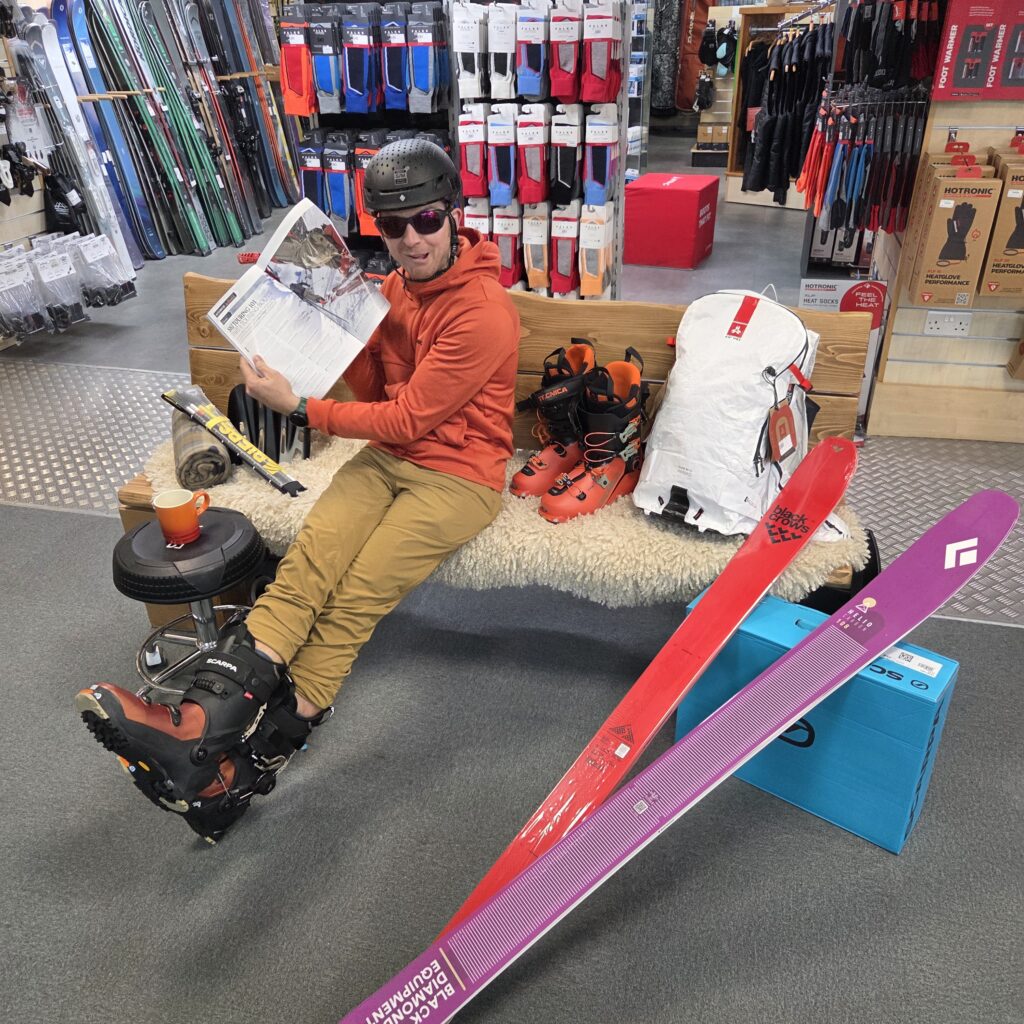
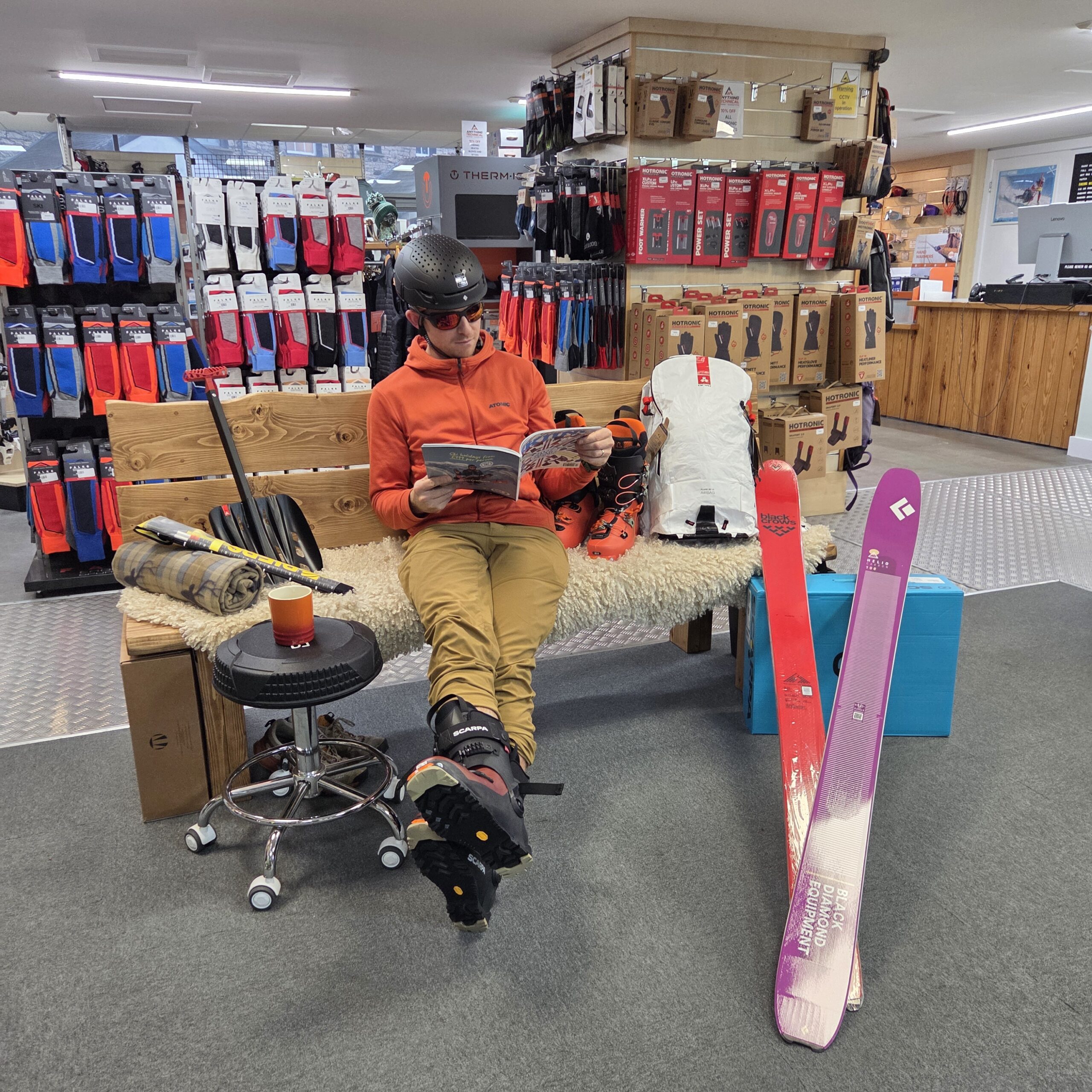
New to Ski Touring? Welcome to Ski Touring 101. Over four issues Anything Technical’s ski gear guru Callum Highet will guide you through the essential kit, starting this month with touring boots
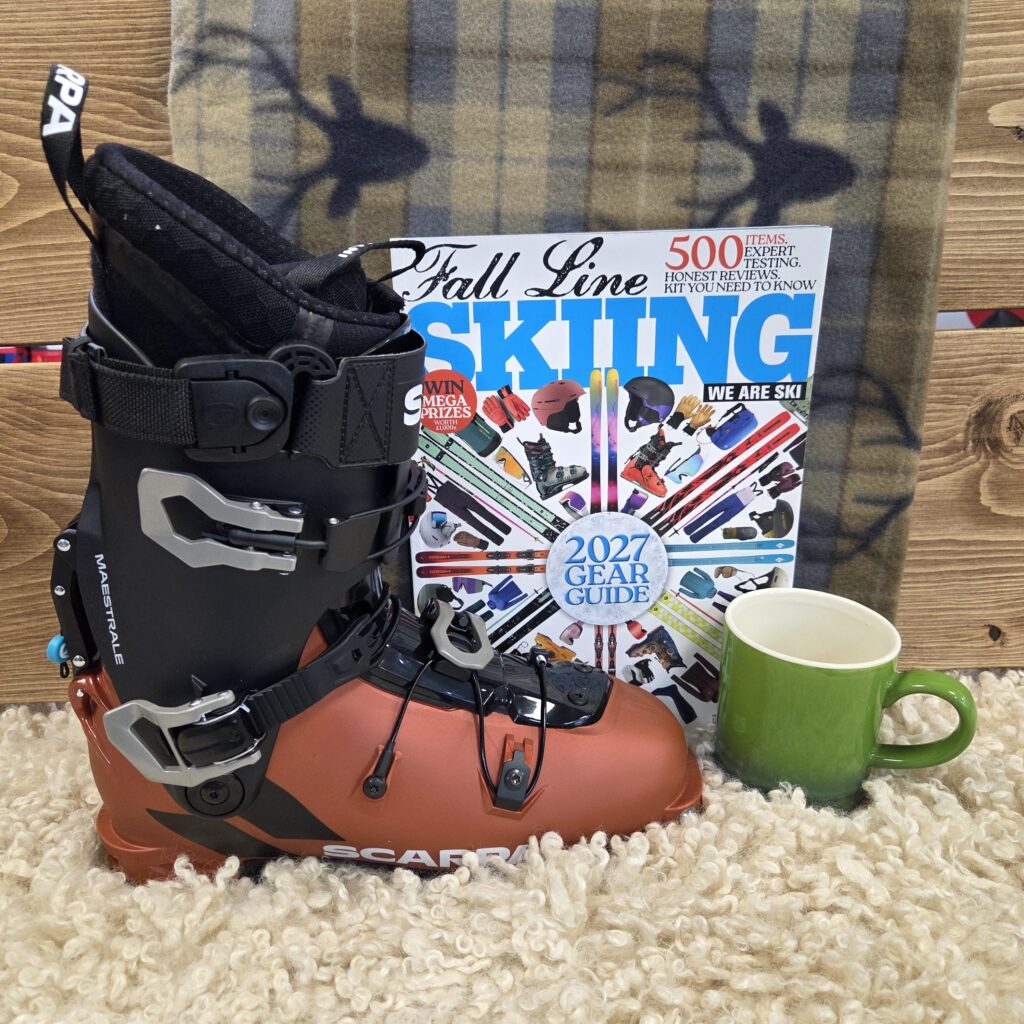
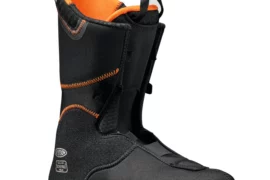
If you’re new to ski touring, one of the first things you’ll need to get your head around is the difference between a touring boot and the alpine boots you’re probably already familiar with.
While they might look similar, they’re built for a very different kind of day on the mountain. Put simply, alpine boots are made for downhill, lift-accessed skiing, while touring boots are designed to get you uphill efficiently, giving you the freedom to leave the lifts behind and explore beyond the resort.
The biggest difference is the walk mode. Touring boots can unlock at the cuff, giving you a large, natural range of movement. Combine that with a rugged rockered sole, and walking through snow or scrambling over rocky terrain is far less awkward than in alpine boots.
Typically, they’re also much lighter. When you’re ascending for hours, every gram counts. Most touring boots now feature integrated pin/tech inserts in the toe and heel, allowing them to connect securely into light pin bindings.
What’s the trade-off? Alpine boots are generally heavier and stiffer, giving you more power and precision on the descent. Touring boots have traditionally had to compromise downhill performance to keep weight low. But the gap is closing, with brands constantly developing lighter touring boots that deliver increasingly impressive alpine-style performance on the descent.
Then there’s the 50/50 hybrid touring boot, designed to push that balance even further. With a little more weight and downhill performance than a traditional touring boot, but still with enough walkability for touring, it aims to offer the best of both worlds – a boot that works equally well in the resort and beyond the lifts.
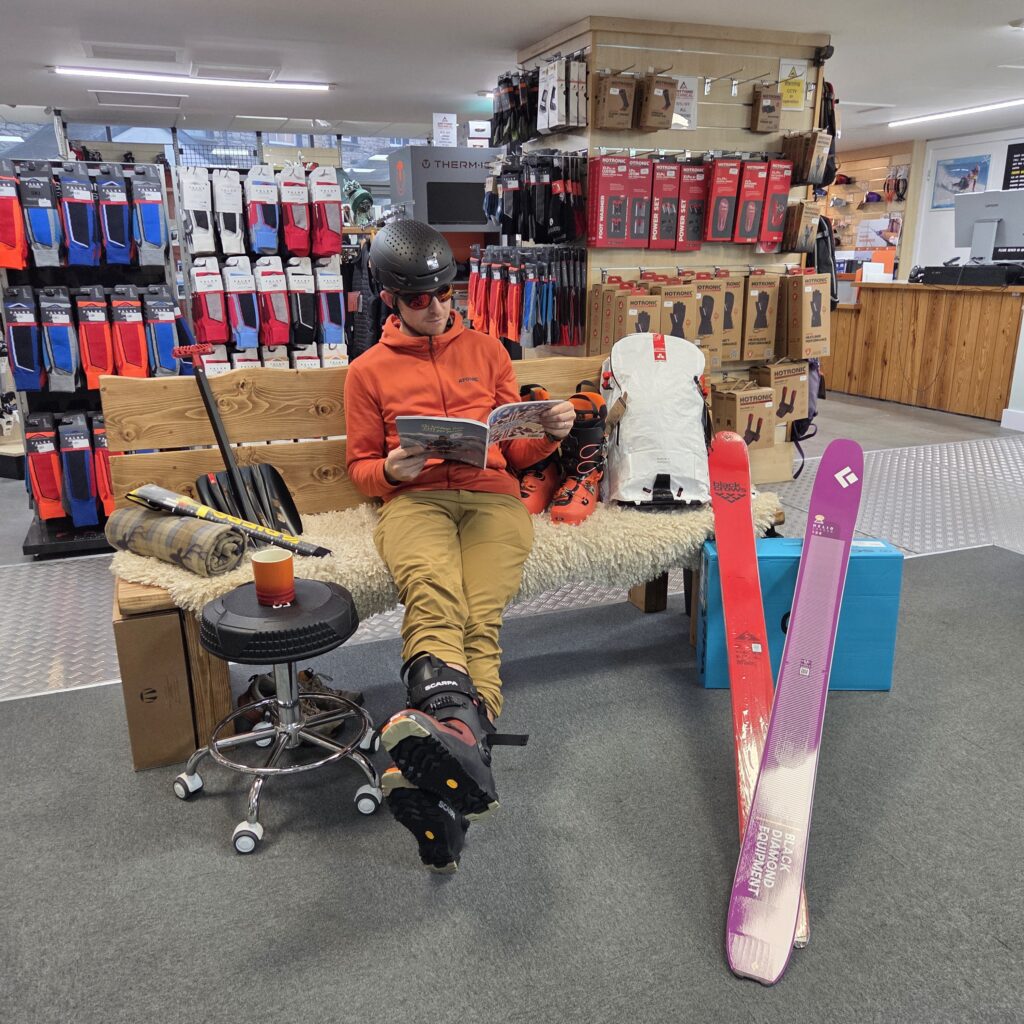
CHOOSING THE RIGHT BOOT
Not all ski touring boots are made for the same journey. If you’re pursuing long days in the backcountry, stepping out for the occasional tour or looking to balance uphill ascents with
lift-accessed resort skiing, finding the right boot starts with understanding what they do well – and where their weaknesses lie. Keeping it simple, there are three main types:
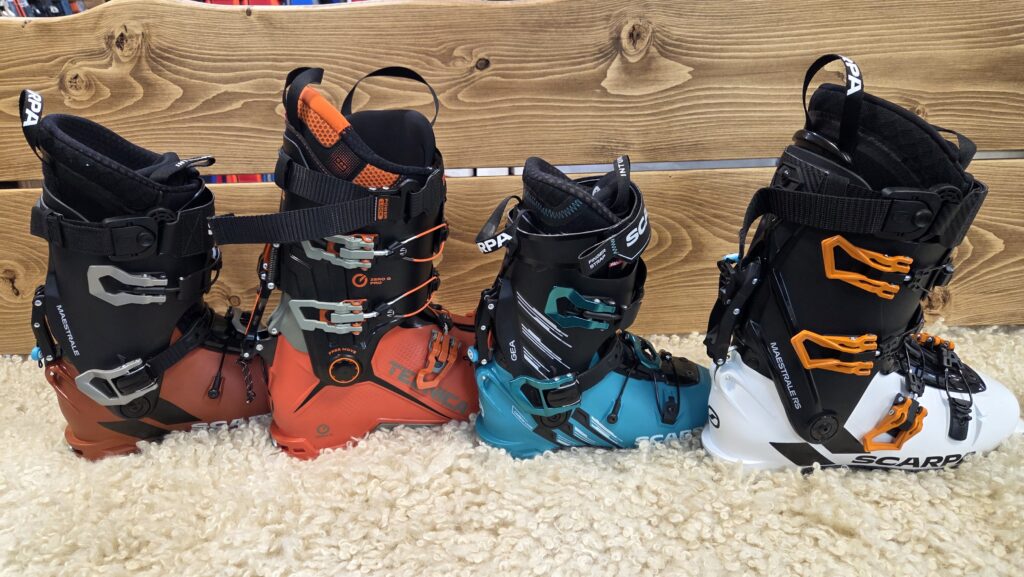
Speed boots: Built for the Climb – ‘Mountain Goat’
75-85mm skis
Planning long tours, big vertical days or multi-day adventures? Lightweight boots prioritise efficiency, making every uphill step easier. The trade-off is less downhill power and stability than heavier models.
Tour boots: The All-Rounders – ‘All-Day Adventures’
85-95mm skis
Looking for a bit of everything? Midweight boots balance uphill efficiency with downhill performance, offering enough support and control for varied terrain.
Freetour boots: Built for the Descent – ‘Powder Hunters’
95mm+ skis
If your tours are all about fresh snow and challenging lines, a more substantial boot could be the answer. They offer greater stiffness, power and downhill control, but you’ll carry more weight on the climb. There is a fourth option: race boots, designed for the uphill focused skimo racer, suited from head to toe in lightning-fast lycra. If you want to stop for a coffee and sandwich, maybe a slice of flapjack to keep you going mid-tour… I suggest you don’t look at these as an option.
Before choosing a boot, ask yourself:
- How far do you intend to climb? Long climbs call for efficiency
and comfort.
- How much time do you spend skiing downhill? If the descent is
your priority, downhill performance becomes more important.
- Are you touring regularly or occasionally? Your choice may differ
depending on how often you head into the backcountry.
- Do you also ski in resorts? A hybrid or freeride-touring boot could
offer useful versatility
Does the fit really matter?
Yes. Very much. You could be wearing your boots for hours, walking uphill before skiing back down. A good fit should feel snug and secure without being painful. Too loose, and your foot can move around, causing blisters and reducing control. Too tight, and you’ll notice numbness, cramping, and pins and needles. You also need enough freedom to move naturally in walk mode, while keeping your heel secure in ski mode.
FIVE COMMON SKI TOURING BOOT PROBLEMS
1 Heel lift – ‘The big one’
Heel lift – ‘The big one’ Your heel should stay secure when you walk and ski. If it
constantly lifts inside the boot, you can end up with sore feet and less control. Heel retainers or boot-fitting padding can be added to your ‘Feet First Aid Kit’.
2 Cold or numb toes – ‘Feel it in my fingers, but not in my toes’
A boot that’s too tight can restrict circulation, while too much space can leave your feet moving around and struggling to stay warm. Heated socks can help, but they do increase the volume inside the boot slightly.
3 Pressure points – ‘Feel the burn’
A little discomfort in the shop can become a serious problem after hours on the skin track. Pay attention to pressure around your toes, ankles and the sides of your feet.
Top tip – wear your boots at home for several weeks before your trip. This will highlight any areas that need tweaking.
4 Blisters – ‘Disaster strikes!’
Hot spots are often a warning sign that something isn’t quite right. Excess movement, rubbing or poor sock choice can turn an otherwise great day into an uncomfortable one.
My ‘10p’ – avoid overly thick socks and aim for a good fit with minimal movement inside the boot. If your touring boot has an ankle strap or buckle, make sure it’s fastened so the heel
always stays anchored.
5 Poor walk or ski performance – ‘I can’t go on’
If your boots don’t move freely in walk mode, climbing can feel unnecessarily tiring. Equally, if they don’t hold your foot securely in ski mode, you may notice a lack of control on the way down. Performing a boot ‘MOT’ before your trip is always worth doing. Check the walk mechanism bolts are secure, clear any dirt or debris, and make sure the pivot points aren’t moving.
WHAT TO TAKE AWAY?
A ski touring boot isn’t something you can buy with a click of a button. Ski boot fitting is human and physical – not virtual. Your feet, skiing style and touring needs are unique. An independent ski shop with a professional boot fitter can assess your feet, understand how you ski and tour, try different boots and make precise adjustments to get the fit right. don’t order your next pair online – see an independent boot fitter. A properly fitted touring boot is one investment worth making.
skiequipmentuk.co.uk
Purchase the Fall Line Gear Guide here – https://www.fall-line.co.uk/